
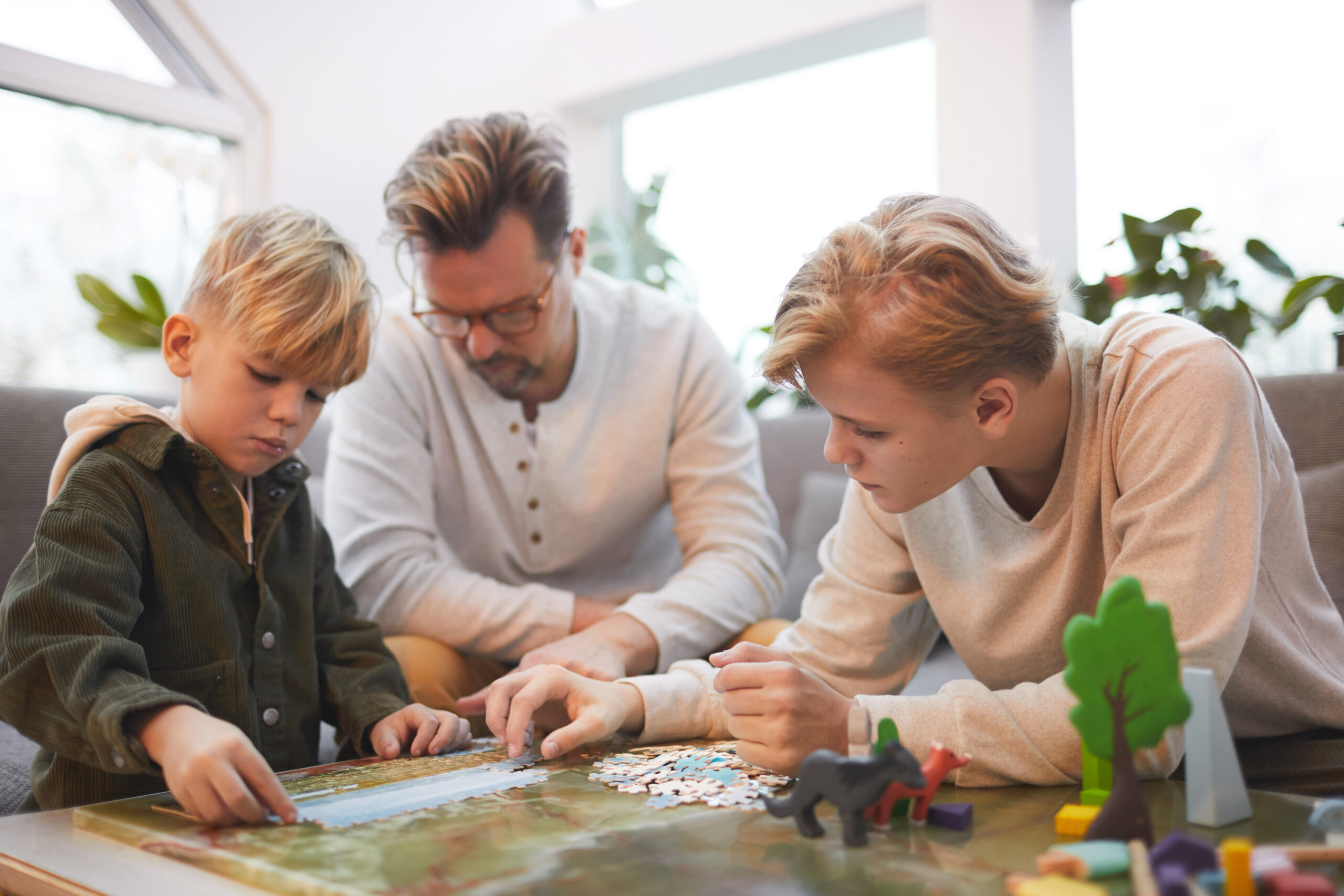
The process of spending time with one’s family can be rather challenging these days due to numerous reasons. Nevertheless, discovering how to spend time doing fun things indoors can improve family relationships and help raise loving learners who will have a passion to explore new things. Therefore, it is crucial to find interesting activities to entertain the members of one’s family indoors. For instance, it is possible to choose among various arts and crafts projects or science experiments that can help one develop certain skills.
Indoor Arts and Crafts Projects
There are multiple ways of encouraging imagination and self-expression of one’s children by means of doing arts and crafts projects indoors. In fact, a separate area can be devoted to these activities. In particular, it would be necessary to buy paint, brushes, markers, and other supplies for painting or crafting. It is also essential to buy paper that can be used for making various things such as origami objects. In order to motivate one’s children, it would be possible to organize arts and crafts sessions devoted to specific themes such as winter or summer seasons.
For example, a good way of spending time is creating a paper plate butterfly. The object will require cutting out different shapes from a paper plate and painting and decorating them with markers. Another idea would be to create a picture with the aid of one’s children’s fingerprints. One can simply paint his/her children’s hands and make them place prints on paper. Thus, this activity will help to preserve certain memories and develop fine motor skills.
Moreover, a DIY photo album would be an interesting idea for one’s children. It will be possible to cut out pictures from one’s old magazines and paste them on cardboard or in scrapbooks. In addition, one can ask his/her children to write stories under these photos and help him/her to do it. Such a project would be entertaining and instructive.
Indoor Science Experiments
Science experiments can encourage one’s children to be curious and explorative. For this reason, it will be possible to prepare a home lab with various items required to conduct interesting experiments. For example, one will need baking soda, vinegar, and other household items in order to perform simple experiments which will demonstrate some scientific phenomena to his/her children. Some of the ideas that can be implemented at home include making slime, a volcano, and a lava lamp.
For instance, slime can be created by means of mixing glue, borax, and water. Another idea would be creating a model of volcano by means of placing baking soda and vinegar in a plastic cup and observing the reaction. Thus, one’s children will see how these experiments work and be fascinated by the phenomenon. A homemade lava lamp is another fascinating idea to conduct with children at home. One should fill the bottle with water and pour oil inside.
Then, he/she should add some food coloring and dish soap into the bottle to produce beautiful colors and observe the movement of liquids.
Indoor Games and Puzzles
Various games and puzzles will allow one to interact with children, develop critical thinking, and foster collaboration. There are plenty of ideas concerning this issue. Firstly, one can devote special evenings to board games with his/her children playing games such as Monopoly and Scrabble. Also, it is possible to create a puzzle station and offer various types of puzzles that will engage children.
For instance, such games as Charades and Pictionary will be very useful in developing critical thinking skills as well as creativity. Moreover, organizing a treasure hunt will allow one to encourage the imagination of one’s children. Thus, creating hints will help to discover his/her children’s minds in an entertaining manner.
As for the idea related to developing problem-solving skills and perseverance, it is possible to prepare a puzzle challenge. One will have to develop a sequence of increasingly difficult puzzles and let his/her children solve them. Thus, he/she will be able to train his/her children to concentrate.
Indoor Music and Dance
Activities related to music and dance will allow children to be more self-expressive and creative. For this purpose, one can organize a dance party playing some of the best tracks in terms of dancing and enjoying music. Also, creating a music station with musical instruments such as guitars, drums, and keyboards will be a great option. This type of activity will foster rhythm skills in children as well as hand-eye coordination.
For example, it would be nice to prepare a dance routine to some popular music. One can also encourage one’s children to create musical instruments from pots and pans. Moreover, one will be able to have a karaoke party. He/she will have to gather a microphone and a speaker and sing with his/her children.
Indoor Storytelling and Role-Playing
It goes without saying that storytelling and role-playing will promote imagination of children. It would be possible to set up storytelling activities involving books, dolls, and other objects that can be used in the narration. Furthermore, creating a dress-up corner for one’s children will be a wonderful idea for encouraging their imagination. Children will wear all kinds of costumes and play roles. Thus, it would be necessary to provide costumes for one’s children.
Conclusion
To sum up, there are multiple activities that one can organize with his/her children. Among the most popular ideas include organizing activities related to indoor arts and crafts projects, science experiments, board games, puzzles, dancing, music, storytelling, and role-playing. By doing these activities, one will foster creativity, imagination, critical thinking, and other skills in his/her children.