
Helping a child establish a proper study routine plays a pivotal role in his/her further development and academic success. Finding the right balance between study time and play time is quite difficult for a parent. With a thoughtfully planned study schedule, you will be able to ensure that your child stays motivated and follows the plan without experiencing any difficulties. In addition, implementing an appropriate study routine will encourage a kid to develop the love for learning that he/she will demonstrate throughout life.
Creating a Study-Friendly Environment
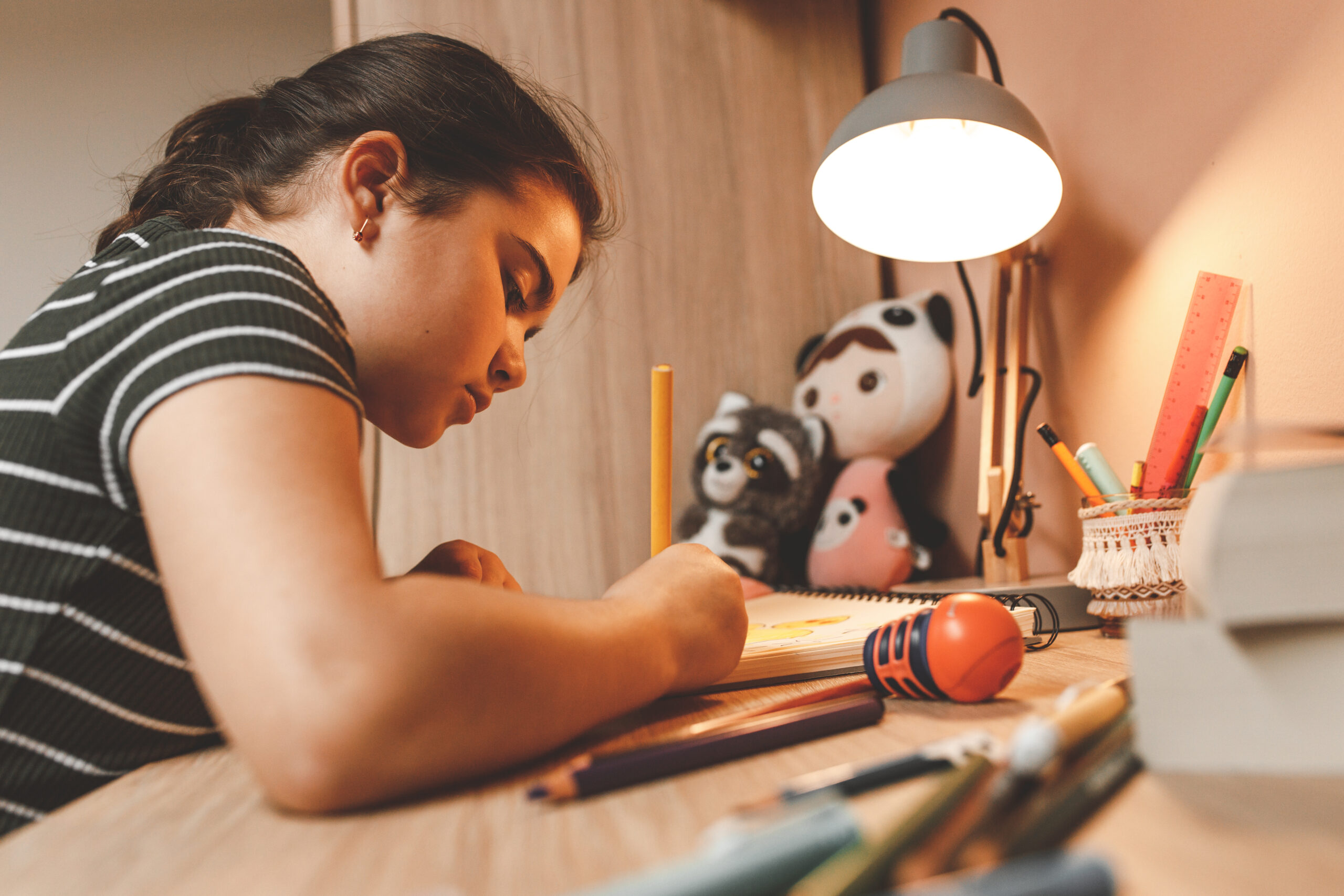
Creating a study-friendly environment requires you to set aside an appropriate space to promote study at home. The best idea is to provide a special place where a child would feel motivated and inspired to learn new things and develop necessary skills. You should make sure that the selected study location provides sufficient lighting and does not contain any elements that can distract a child. Consider purchasing a comfortable study table, chair, and necessary office supplies to facilitate the process.
Before choosing a study location for a child, think about his/her specific requirements. While some students need absolute silence during the study time, others prefer a bit of noise and activity around. Taking into consideration the personality type and peculiarities of your kid’s learning preferences, you can easily select the best option. In case you deal with a visual learner, you may consider placing various colorful diagrams and pictures in the room.
Setting Realistic Goals and Schedules
To develop an effective study routine for your child, it is crucial to identify his/her individual needs and requirements and then develop the corresponding plans. Start from encouraging a child to set realistic goals that can be achieved through studying. Try to break large projects and tasks into several stages in order to motivate a kid to continue working on them. Besides, establishing a regular schedule will allow you to teach a child to follow the routine.
While developing a certain schedule, you should keep in mind the specifics of a child’s education, age, and preferred learning style. Young kids will require more frequent breaks and shorter study periods, whereas teenagers will prefer to study for long periods of time. Always be ready to adjust the schedule in accordance with a kid’s needs and current activities.
Using Positive Reinforcement and Motivation
Motivation and positive reinforcement are critical aspects that should not be overlooked during the development of an effective study routine. Whenever you observe the child’s efforts or achievements, make sure to compliment him/her and acknowledge these outcomes. It will have a positive influence on a child’s attitude towards studying and learning process in general. Do not blame or punish your kid for any errors he/she makes.
There are many ways to keep your child motivated while he/she studies. First of all, try to incorporate different fun games and activities into the learning process. You can use flashcards to practice words, organize a study competition with other family members, or host a study party with snacks and music. The main idea is to motivate a kid to participate in the studying process actively.
Making Learning Fun and Engaging
Making the learning process fun and engaging can help a kid develop necessary skills and acquire useful knowledge faster. You can use numerous activities and games to help a child absorb the information and remember it well. Be ready to experiment with different options and try something new as far as your child’s study routine is concerned.
While using different learning activities, pay careful attention to a child’s interests. For example, if a child is fond of music, he/she will definitely enjoy music-based assignments. Thus, your child will be able to memorize the name of a historical date or a scientific theory in the form of a poem or a rap. Another idea to consider is creating different artworks to illustrate complicated concepts.
Encouraging Active Learning and Participation
In order to help your kid develop a proper learning routine, you should encourage him/her to participate in various discussions and activities. Your child needs to have an opportunity to engage actively in the learning process. Let a kid ask questions and discuss different ideas and thoughts. Encourage your child to choose the study materials and tasks independently.
When motivating your child to learn actively, make sure to create an appropriate atmosphere. Let your child take risks and try different approaches to learning. Do not overwhelm him/her by providing detailed answers to questions. Instead, ask questions and guide a kid to find the right answer himself/herself.
Managing Distractions and Procrastination
As far as the management of distractions and procrastination is concerned, you need to help a child develop appropriate skills to stay focused while studying. There are many techniques that can be used to maintain concentration and avoid wasting time. You should also show your child how to divide large tasks into smaller steps and then take a short break after every completed stage.
As soon as you start dealing with distractions and procrastination, it is important to create appropriate conditions and inspire a kid to do so. Model the studying behavior and demonstrate the importance of such an activity to your child. Do not distract him/her and limit assistance to a minimum amount possible.
Conclusion
Establishing a proper study routine for a child will become quite challenging for a parent, but if you try your best, you will be able to help him/her learn effectively. First, create a study-friendly environment; then, set goals and schedules, use motivation and reinforcement, and make the learning process engaging and fun. Additionally, motivate your kid to participate actively and avoid distractions and procrastinations.