
The education process requires certain efforts on behalf of students as there are new concepts, theories, and ideas that need to be memorized and implemented at school. In addition to that, social pressures and expectations contribute to the learning experience and make it more challenging. Luckily, it is possible to improve one’s performance and get a valuable set of skills by applying certain strategies. Creating a supportive learning environment and fostering the passion for acquiring knowledge is a good start towards success.
Establish a Consistent Routine
As far as the learning process goes, there is no better approach than a consistent daily routine that provides students with discipline and helps them develop useful skills. Thus, by having an appropriate schedule, children can effectively manage their time, focus, and energy as well as learn something new and become more successful. It is also necessary to ensure your kid gets enough sleep, exercises regularly, and has proper nutrition because all these aspects influence academic progress.
When creating a learning routine, one should take into account the following tips:
- Clearly state what your expectations and goals are.
- Prepare a schedule with the designated time for homework, studying, and relaxation.
- Divide tasks into smaller and manageable parts.
- Have some spare time just in case of unforeseen circumstances.
- Encourage breaks and physical activities to energize the child.
Thus, developing a consistent routine is a way to teach children how to organize their work and become disciplined, which eventually improves their academic performance.
Create a Conducive Learning Environment
It is impossible to succeed without a good environment since it is what makes one feel motivated, inspired, concentrated, and creative. All in all, it creates additional positive conditions and supports academic success. That is why you should try to create a comfortable and favorable environment for your kids’ education, and they will definitely benefit from it.
The following aspects are worth considering when establishing a conducive learning environment:
- Find a special place for studying at home where the kid will be able to concentrate.
- The learning place should not contain any distractors; otherwise, your kid will lose interest.
- Provide a comfortable chair and appropriate lighting.
- Place everything your child might need during studying.
- Let your child decorate the place as he or she wishes.
Thus, the environment influences children’s critical thinking, imagination, creativity, problem-solving, and other skills needed for educational success.
Encourage Active Learning
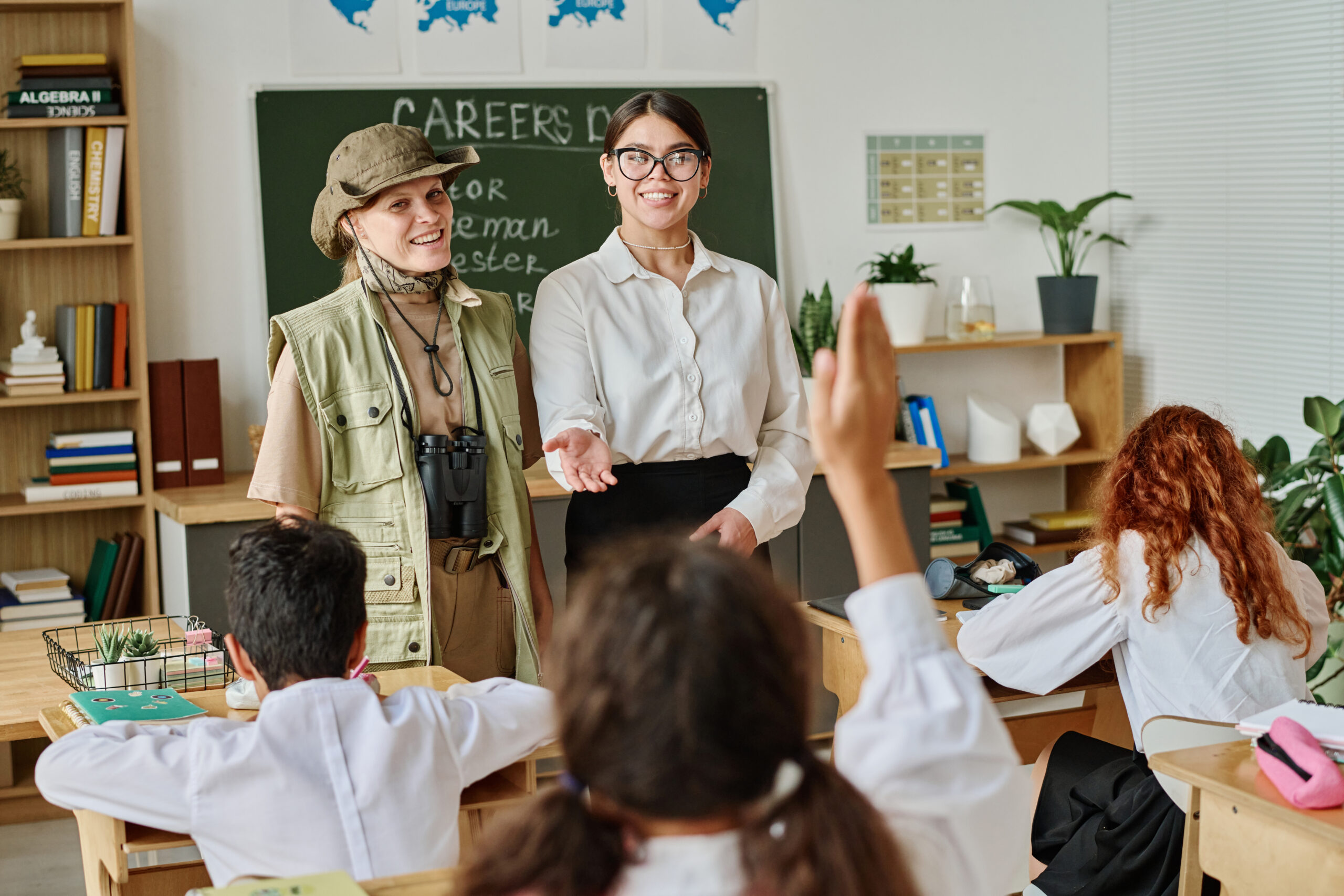
This strategy is rather popular among educators and contributes to the effectiveness of studying since active learning involves participation in various activities. By getting involved in discussions, debates, and different exercises, students learn how to communicate with peers and teachers, and thus, their motivation and engagement increase.
Here are several ways how you can encourage active learning:
- Engage your child in hands-on activities such as art projects and experiments.
- Start discussions or hold debates related to a particular theme (literature, history, politics).
- Participate in role plays or simulations to promote critical thinking.
- Develop your kid’s questioning skills.
- Facilitate cooperation within groups and between classes.
Thus, your child’s imagination, creativity, and ability to think critically will develop faster thanks to active learning.
Foster a Love for Learning
It is necessary for your kid’s success and future achievements as it helps students stay interested in studying despite difficulties they might face. Thus, the more passion for education children have, the more motivated they are going to be to learn new things and acquire valuable skills. Moreover, passion fosters development of critical thinking, problem-solving, and communication skills.
To foster passion for learning, you can:
- Ask your child to look for answers to questions he or she has.
- Offer your child to engage in activities that can trigger his or her imagination.
- Read interesting books and stories that will help your kid become passionate.
- Help him/her to find inspiration through arts, singing, or dancing.
- Cheer your child up by praising even the smallest achievements.
Passion for education is beneficial for children as it develops imagination and thinking, and thus, contributes to academic success.
Encourage Physical Activity
Exercise is very important as it affects children’s physical health as well as brain functions, which positively influences their academic performance. That is why, regular exercise and sport are great activities that not only boost physical well-being but also help stay engaged in studying.
One can do the following when encouraging physical activity:
- Motivate your child to exercise, walk, run, or swim regularly.
- Suggest some team sport, such as soccer, tennis, basketball.
- Encourage your child to spend some time outdoors.
- Find new ways for exercising and motivate your kid to choose them.
- Reward your child for participating in physical activities.
That will definitely help your child develop coordination, endurance, teamwork, and other essential skills.
Monitor Progress and Adjust
Monitoring students’ performance is the final step of improving children’s academic achievements. You need to constantly track their progress, identify their strengths and weaknesses, and adjust their strategy to make them work harder and concentrate. Otherwise, your kids will never learn how to set goals and follow a plan to reach it.
To monitor your child’s performance and adjust his or her learning process, you should:
- Check your kid’s progress regarding grades, attendance, and behavioral issues.
- Determine the problem areas and offer your help.
- Change your kid’s learning strategy if needed.
- Communicate regularly with your child’s teachers and understand their position.
- Praise your child’s achievements and cheer him/her up.
Thus, this practice helps develop your kid’s goal-setting and planning skills.
Conclusion
Academic growth is achieved through a combination of consistent routines, active learning, and a supportive study environment. Encouraging curiosity, physical activity, and a genuine love for learning helps children stay motivated and perform better in school. Regularly monitoring progress and adapting learning strategies ensures continuous improvement. With the right guidance and encouragement, every child can develop the skills needed for long-term educational success.