
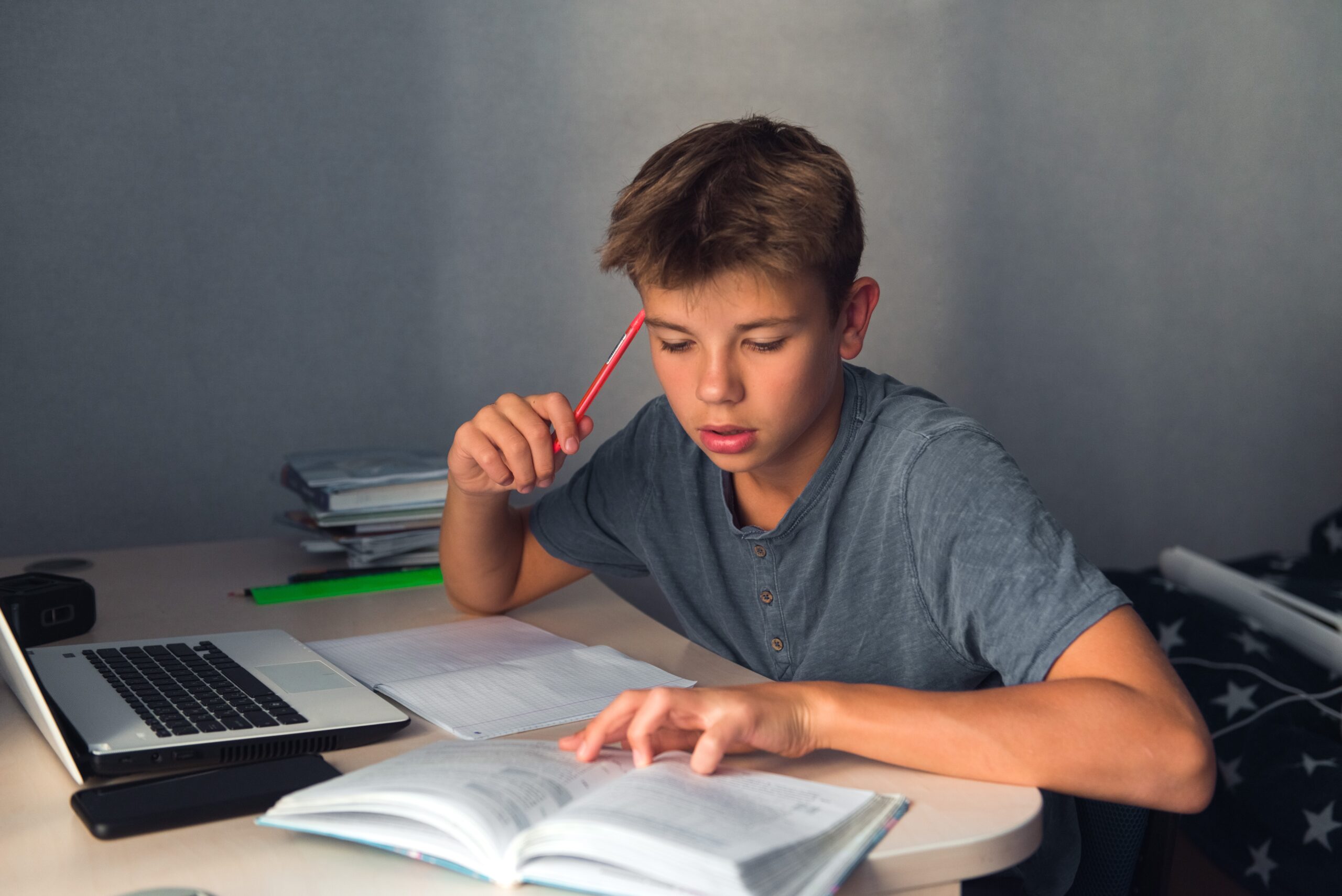
It goes without saying that every educator or parent knows the importance of instilling sound study habits among children. Individuals who can focus and maintain a study schedule successfully perform well at school and develop lifelong love for learning. However, it is quite difficult for many children to concentrate on doing homework. It is not unusual for parents to feel lost when it comes to improving children’s concentration skills. Luckily, there are some simple study tips that can be used on a daily basis to make your child more focused and successful in terms of school performance.
Establish a Study Routine
It is important to establish a study routine for your child. It will make your kid learn to take responsibility and know what is expected from him or her. First, you need to define particular periods when your kid does homework or reads books. There are several options for organizing a routine. For instance, you may use a planner or calendar to help your child become more disciplined.
In addition, it is necessary to teach a kid to prioritize tasks and divide them into smaller components. For example, if your kid studies math and has a test, you should help him or her to break down the study process into steps: reviewing class notes, practicing solving problems, etc. It will facilitate studying and increase concentration. Another step in organizing a routine is allocating time for homework and reading books every day.
Create a Conductive Study Environment
The environment influences children’s ability to concentrate and participate in study activities considerably. It is known that a dirty and chaotic place decreases students’ concentration, whereas a conductive study space positively impacts them. In order to create such an environment, consider the following steps:
- Choose a certain place where your kid will conduct study activities.
- Arrange a comfy workplace (a desk or a table).
- Make sure there is enough light in the room.
- Do not allow any possible distractions in the room.
First of all, you should help your child to organize his or her study area. For instance, it is advisable to arrange a comfortable desk and chair for your child. Next, make sure there is enough light in the room (the source of light can be the window or a special desk lamp). Finally, it is necessary to create favorable conditions for learning. Therefore, turn off the TV and all other electronics that may cause distractions.
Encourage Physical Activities
As it was mentioned above, it is important to be physically active to concentrate well. Exercising promotes the development of thinking skills, improves moods, reduces anxiety, and consequently enhances concentration. If you want your child to be more attentive during classes and home activities, you should follow the next advice.
- Encourage participation in sports (soccer, basketball, swimming).
- Consider attending physical education courses or joining a sports club.
- Motivate your kid to be physically active (jogging, walking, cycling).
For instance, you may recommend your child to attend sports clubs or physical education courses. It will contribute to maintaining a healthy body weight, improving health, and acquiring new useful skills. Furthermore, you may encourage your kid to go in for a particular kind of sport he or she likes.
Practice Self-Regulation and Mindfulness
Self-regulation and mindfulness skills are important for children to stay focused and attentive. Self-regulation implies the capability to control one’s emotions and behavior. Meanwhile, mindfulness denotes being present and concentrated on what is happening at the moment. In order to practice self-regulation and mindfulness, you may offer your child to implement the following measures.
- Train mindfulness via meditation, yoga, or similar practices.
- Teach children to understand and control their emotions (anger, sadness, or excitement).
- Encourage taking breaks to read books or listen to music.
For example, your kid may find it interesting to practice meditation or yoga in order to become mindful. Moreover, teaching him or her to control own emotions may help in developing self-regulation skills. Thus, children will be able to focus on their tasks.
Set Realistic Goals and Expectations
Setting realistic goals and expectations is critical to ensuring children’s focus and motivation. On the one hand, unrealistically high expectations or goals usually cause frustration. On the other hand, realistic expectations make children successful and motivated. Here are some tips on setting appropriate goals.
- Establish clear and realistic objectives, e.g., solving 5 math problems per day.
- Help children divide their tasks into smaller and more manageable parts.
- Praise your kids for achieving their goals.
For example, you may help your child to set a goal of learning a particular skill or accomplishing certain tasks. It is also crucial to divide a general task into smaller parts to make the process less overwhelming.
Provide Positive Feedback and Encouragement
Giving positive feedback is of great importance to motivate your kids to study and concentrate. Children feel more confident if they hear encouraging words and remarks from educators and parents. In case if the latter ones use negative criticism, children can experience feelings of discouragement. How to provide your child with positive feedback? You may try to follow some recommendations.
- Give your kid specific praise for effort and achievements.
- Advise celebrating his/her successes and accomplishments.
- Instead of criticizing, offer some useful tips.
For example, if your kid has problems with understanding a certain topic in math class, you can say something like this, “I see you are trying hard, but you should not give up. Keep it up!”
Monitor Your Kid’s Progress and Make Some Adjustments to the Strategies Applied
Monitoring children’s progress and implementing necessary adjustments is important in making children focused and successful in their classes. The first step is evaluating your kid’s achievements and adjusting strategies according to the results. Furthermore, it is useful to make records about your child’s progress (e.g., a graph). Besides, you need to remain flexible and ready to change your strategies.
For example, if your kid has difficulties in understanding a certain concept in mathematics, you need to monitor his or her progress and adapt your strategies accordingly. It is likely to provide additional training or find another teacher who will teach this topic more efficiently.
Conclusion
Improving a child’s focus requires consistent routines, a distraction-free study environment, and healthy daily habits. By encouraging physical activity, mindfulness, realistic goal-setting, and positive reinforcement, parents can help children stay motivated and attentive. With patience and ongoing support, these strategies can strengthen concentration, boost academic performance, and foster a lifelong love of learning.