
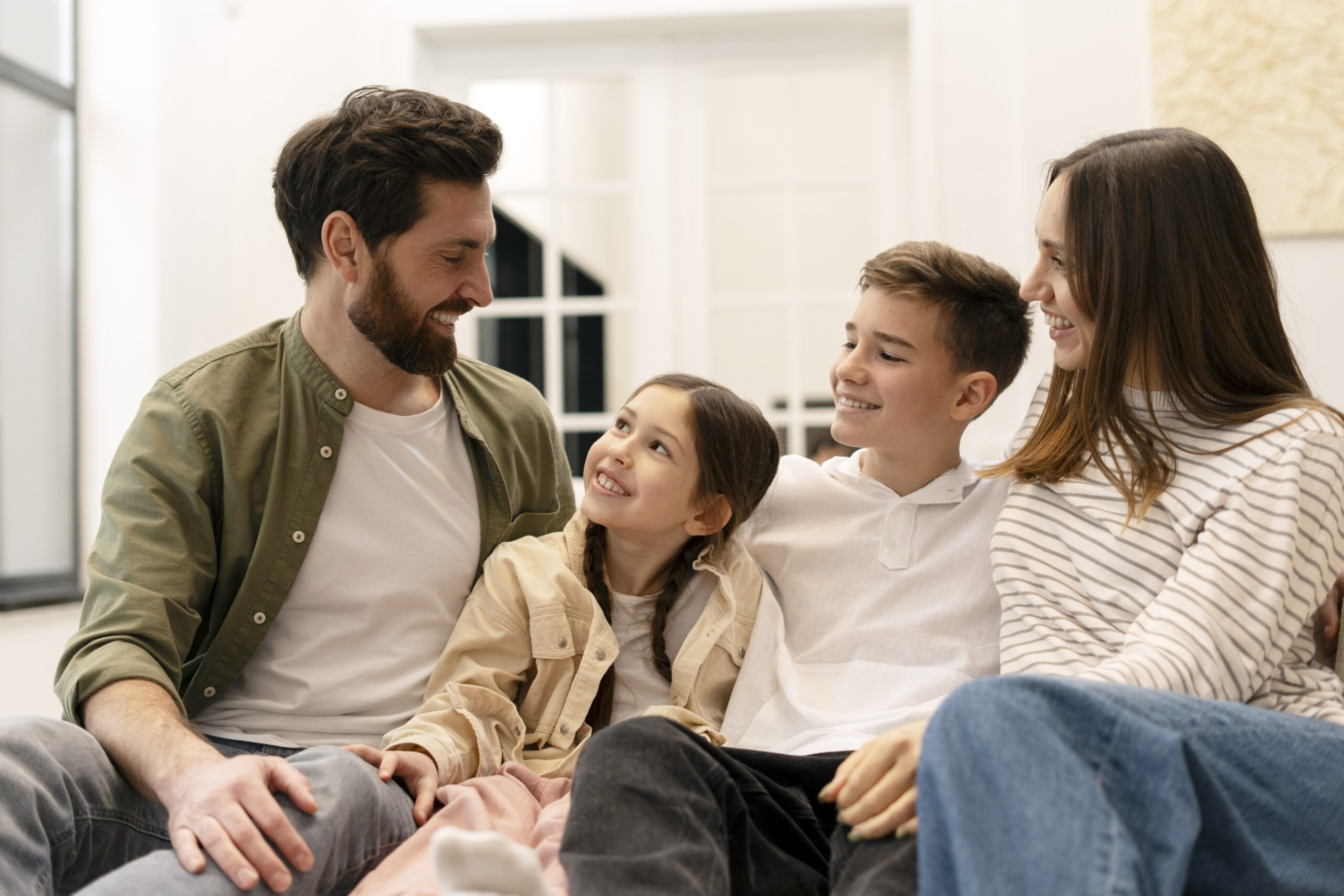
Effective family communication can be described as a fundamental element for developing a good family atmosphere. It serves as the basis for developing strong family relationships. Moreover, proper family communication can have a profound impact on the wellbeing and mental state of family members. Therefore, using appropriate methods of interaction among family members, it will be possible to create harmony and love. In order to facilitate communication within a family, one should utilize several strategies, including creating a positive communication environment, practicing active listening, using non-verbal communication effectively, managing conflicts appropriately, practicing gratitude and appreciation, and prioritizing quality time.
Establishing a Positive Communication Environment
It is important to set a positive communication environment because it can affect family members positively and allow them to interact properly. Setting an example, parents should communicate in an appropriate way. They should pay attention to their body language, tone of voice, language used, etc. It is important not to use negative phrases and avoid placing blame. Additionally, family members should make efforts to listen actively.
In order to establish a positive communication environment in a family, one should organize family meetings and encourage family members to discuss different issues. These meetings can occur during the evening meals or on a regular basis. During family discussions, individuals can talk about different matters, show their gratitude, and share important things happening to them.
Practicing Active Listening
Active listening implies that individuals listen carefully to one another without interrupting each other. In case people feel that someone hears and understands their point of view, they are much more willing to communicate properly. In order to listen actively, it is necessary to use non-verbal communication strategies, such as making eye contact and maintaining an attentive pose. It is also useful to restate other people’s messages.
For instance, if your child talks to you and expresses his/her feelings, it is critical to pay careful attention to what he/she says. Thus, you can say: “So, I understand that you are frustrated because you were unable to play with your friends”. By saying this phrase, you show that you understand what your child wants and that he/she has not been ignored. Consequently, it will be easier for you to discuss different problems with him/her.
Using Non-Verbal Communication Effectively
Non-verbal communication is also an integral component of any interaction because it has a profound impact on communication effectiveness. In case family members feel valued and understood, they are more willing to communicate effectively. To use non-verbal communication effectively, it is recommended to maintain eye contact, demonstrate open posture, and smile to your partner/children while talking to them. In addition, you should avoid cross arms/legs because it can create barriers to communication.
Sometimes it is beneficial to use a mirroring strategy while talking to a person who feels upset. This strategy can involve the reproduction of body language adopted by another person. For instance, if your partner leans towards you, then you should also take this position. In this way, you can create trust between people and improve communication.
Managing Conflict Effectively
Conflicts are inevitable and are characteristic of every family. The thing is that sometimes there may arise situations which will lead to some kind of conflict. However, if one manages conflict correctly, it will be possible to reach a compromise. As a rule, conflicts occur when one of the family members does something unacceptable. One should remain calm and avoid taking anything personally. Moreover, active listening skills should be used here.
To manage conflicts effectively, one should use the technique called “I” statements. In other words, it will be useful to talk in first person singular to avoid putting blame and guilt. For instance, instead of saying: “You never wash dishes,” one can say: “I am frustrated because I see that you do not want to wash dishes. You are supposed to do it”.
Practicing Gratitude and Appreciation
Showing gratitude and appreciation to family members can improve communication. In case individuals feel that their contribution to family life is appreciated, they will be much more willing to communicate with other family members and support them. Thus, it is necessary to appreciate family members’ contributions and tell them about your appreciation.
To practice gratitude and appreciation, one should tell family members about their merits, express gratitude to them and write some thank-you notes. For example, when your son or daughter does a great job at school, you should praise his/her success. So, you can say: “I am glad that you managed to complete your project perfectly!”
Prioritizing Quality Time
As a rule, many people have little time due to their busy schedules and jobs. As a result, family members seldom spend quality time together. In order to enhance communication within a family, it is highly recommended to allocate certain time for communicating with family members and spend time together. Thus, one should allocate time for family activities and organize them in advance.
As a rule, family members should stop thinking about work while spending time with family and forget about smartphones. In other words, one should devote as much time to interacting with his/her family members as possible. One can organize some games for children or cook food.
Conclusion
Strong family communication is built through active listening, mutual respect, and spending meaningful time together. By creating a positive environment, using effective verbal and non-verbal communication, and handling conflicts calmly, families can strengthen their relationships and trust. Expressing gratitude and appreciation further deepens emotional connections among family members. With consistent effort, healthy communication can create a happier, more supportive, and harmonious family life.