
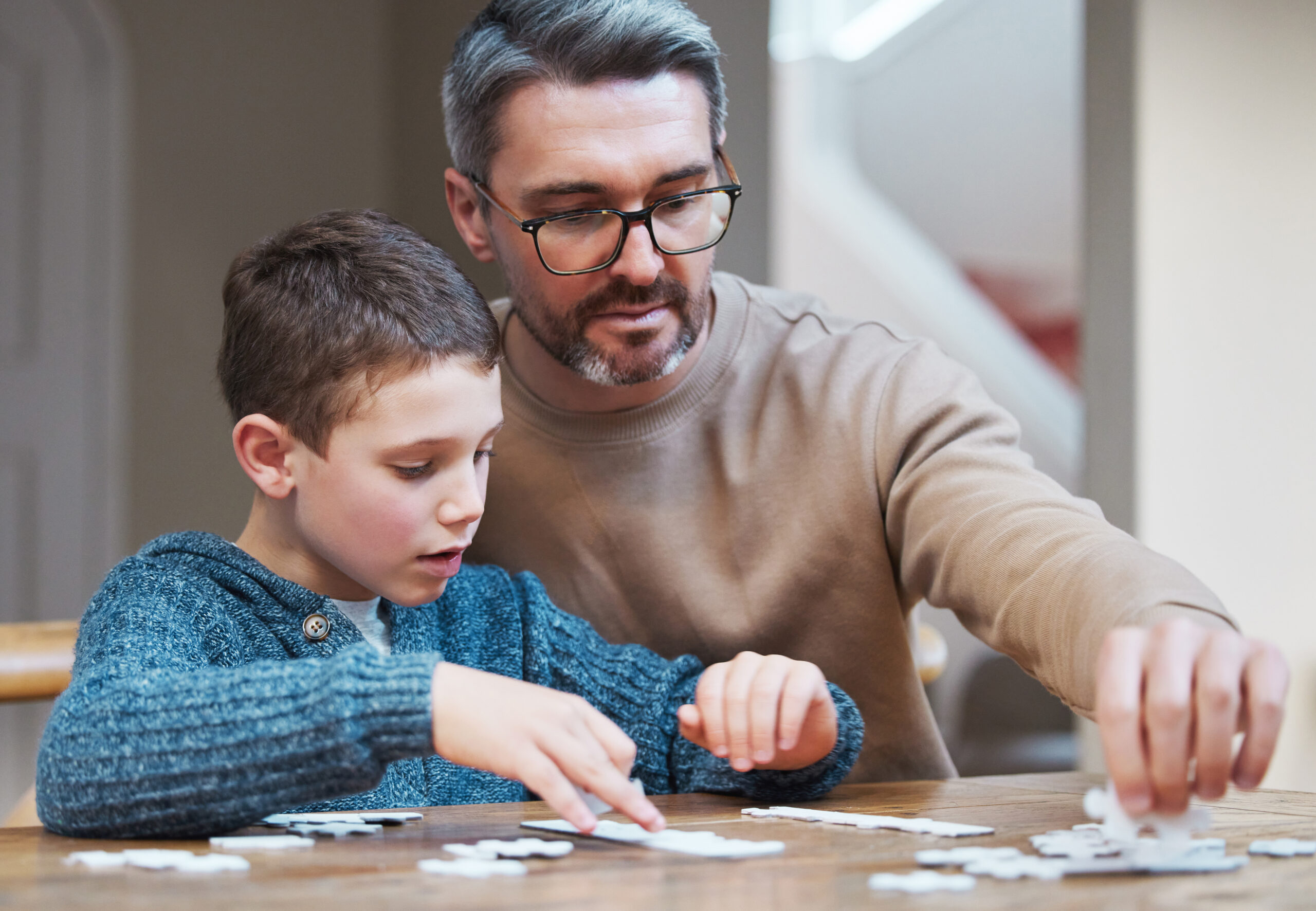
As a parent, you want to raise independent and capable children who can tackle any problem in the world without your help. Teaching your kids problem-solving skills is one of the most valuable gifts you can give them because once they possess them, your children will know how to cope with various problems and overcome challenges with ease. In addition, you play a significant role in your kid’s mental development, and it never hurts to teach him/her how to analyze things, use logic and think critically.
Importance of Problem-Solving Skills
Problems appear every day, so when a person has good problem-solving skills, he/she can easily deal with challenges at work, home, in school or other settings where one needs to apply his/her mind. When a child has developed such skills, he/she will be better prepared for unexpected situations, think creatively and make good decisions. Moreover, these skills can help your kid gain confidence, improve self-esteem and have a growth mindset that are essential for success in many different aspects of life.
Developing Problem-Solving Skills at Home
To teach your kid these vital skills, you should create a proper environment at home. To do this, consider the following tips:
- Provide him/her with open-ended questions to develop critical thinking skills.
- Encourage questioning as this will help your child become a curious person interested in everything.
- Supply various materials and resources that will promote creativity and innovation, e.g. building blocks, toys, and paints.
In other words, creating a proper environment at home is an excellent way to prepare your kid for successful life because it enables him/her to experiment and make mistakes.
Open-Ended Questions
An Excellent Way to Boost Creative and Critical Thinking.
If you ask a question that requires thinking, you encourage your child to explore the topic in depth, think critically and come up with a conclusion. This will help him/her improve his/her decision-making and analytical skills that are important for problem solving. Open-ended questions are quite useful because they cannot be answered simply with “yes” or “no.” Some examples of such questions include:
- What do you think will happen if… ?
- How can we solve this problem?
- What are the possible solutions to this problem?
When you ask open-ended questions frequently, you will encourage your child to think analytically, creatively, and critically.
Various Games and Activities
That Can Help Kids Improve Their Problem-Solving Skills
There are plenty of games and activities that can help you teach your child such crucial skills as creativity and critical thinking. Consider the following ideas:
- Puzzles, Sudoku, and other brain teasers
- Building toys like LEGO or K’NEX
- Science experiments such as building a volcano or making lava lamp
These are only some suggestions, and it is worth noting that you should encourage your kid to engage in any interesting activities.
Promoting Creativity and Innovation
Both creativity and innovation are extremely important components of the process of problem-solving. It means that if you want your child to be a good problem solver, you should promote creativity and innovative thinking. Try to inspire your kid by giving him/her various opportunities, encouraging him/her to experiment, praising him/her and celebrating his/her achievements.
Helping Your Child Learn to Analyze and Evaluate Information
Analyzing and evaluating information is a crucial element of problem-solving because without these skills, your kid won’t be able to find a right solution to the problem. You should do the following to foster these skills in your child:
- Ask open-ended questions to encourage the kid to analyze the situation.
- Encourage your kid to research to prove his/her conclusions.
- Show him/her how to detect biases and assumptions in information provided by people.
In this way, you will teach your child to analyze and evaluate the available information critically.
Making Mistakes and Learning from Failure
Learning from mistakes and overcoming failures are important elements of problem-solving. If you want your kid to become a successful problem-solver, you must help him/her learn that failure and mistakes are acceptable and can provide useful lessons for the future. Follow these pieces of advice:
- Ask your child to take risks.
- Instruct him/her to learn from mistakes and analyze his/her failures.
- Celebrate the efforts of your kid because you shouldn’t focus only on the results.
In this way, you will teach your kid important life lessons related to problem solving.
Conclusion
Teaching your child to analyze information, ask relevant questions, be curious and make mistakes will provide him/her with crucial tools to succeed in life.